About the Faculty of Educational Sciences
The Faculty of Educational Sciences adopts an interdisciplinary approach to individuals’ learning journeys, examining them through pedagogical, psychological, and sociocultural perspectives. Its programs are designed to bridge educational theory and practice, emphasizing research-based learning and critical thinking. Students have the opportunity to explore contemporary educational approaches alongside their historical and philosophical foundations.
Academic Staff
The Faculty of Educational Sciences has a distinguished academic staff comprising professors, associate professors, assistant professors, and research assistants. Its academic staff consists of scholars specializing in various subfields of educational sciences, with academic contributions at both national and international levels.
Educational Philosophy and Academic Approach
The educational philosophy adopted by the Faculty of Educational Sciences is grounded in an academic framework that views education as a holistic process encompassing individuals’ cognitive, affective, and social development. Teaching and learning activities at the Faculty are structured around an approach that examines pedagogical theories in conjunction with their historical and philosophical foundations, prioritizing critical thinking, scientific inquiry, and a sense of ethical responsibility.
The Faculty of Educational Sciences’ academic approach is shaped by the following fundamental principles:
- Educational theories, learning processes, and teaching methods are examined through a scientific, research-based approach.
- The teaching profession is considered not merely a field of practical application but also one with intellectual, ethical, and social dimensions.
- Through an interdisciplinary perspective, pedagogical approaches are connected with fields such as psychology, sociology, and philosophy.
- Through the academic advising system, students’ individual academic development is regularly monitored and guided.
- Particular emphasis is placed on developing students’ academic writing, research, and critical analysis skills.
Student Experience and Academic Life
The student experience is regarded as a learning process that extends beyond classroom instruction and places academic interaction, research culture, and intellectual exchange at its core. Academic life at the Faculty is enriched by a wide range of opportunities that support students’ professional and intellectual development.
The academic and social opportunities available to students include:
- Students make effective use of library facilities and study spaces that accommodate both individual and group work.
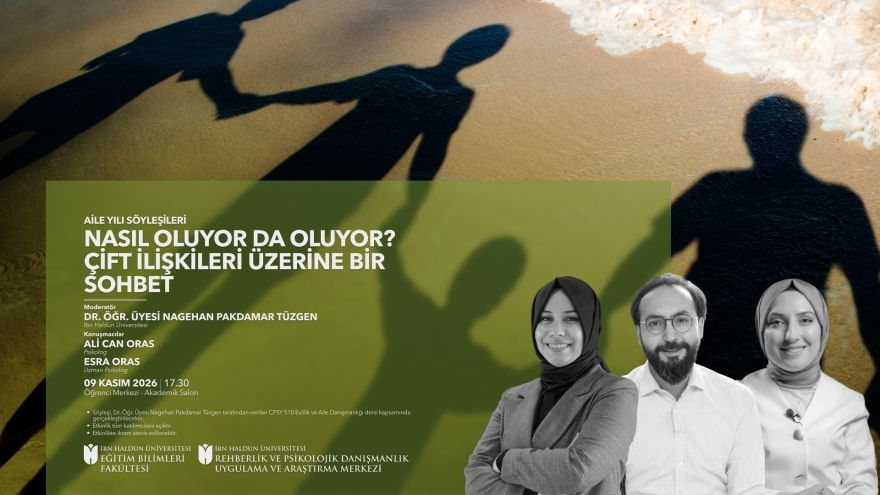
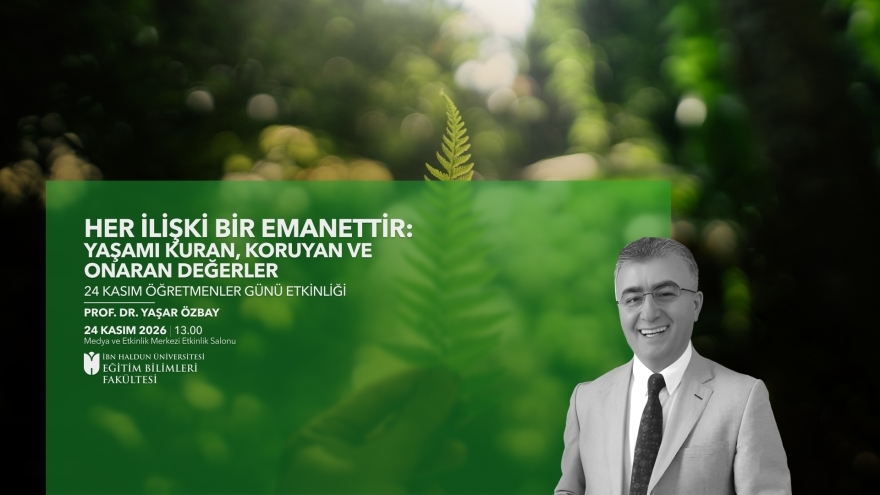
- Learning beyond the classroom is supported through seminars, talks, and academic events focusing on education, learning, and the teaching profession.
- Regular interaction with academic advisors helps students shape their academic interests and aspirations in an informed manner.
- Student clubs and cultural activities enable students to connect pedagogical perspectives with social and cultural contexts.
- The university’s multicultural environment allows students to explore different educational philosophies and develop comparative thinking skills.