Article by Asst. Prof. Esra Akgül, “Engineering Design Test in Early Childhood” Published

The article titled “Engineering Design Test in Early Childhood: A Validity and Reliability Study”, co-authored by Asst. Prof. Esra Akgül, published in the International Journal of Technology and Design Education, an SSCI-indexed Q1 journal.
The article titled “Engineering Design Test in Early Childhood: A Validity and Reliability Study,” co-authored by Asst. Prof. Esra Akgül, a faculty member of our School of Education, together with Prof. Şermin Metin, Assoc. Prof. Mehmet Başaran, Prof. Yaşar Özbay, Asst. Prof. Merve Yıldırım Seheryeli, Asst. Prof. Zeliha Damla Kalyenci and Asst. Prof. Mihriban Özcan, was published on April 16, 2026, in the International Journal of Technology and Design Education, an SSCI-indexed Q1 journal.
The importance of skills acquired at an early age in science, technology, engineering and mathematics (STEM) is growing worldwide. In this context, assessing children’s engineering design skills with scientific and reliable tools has become an important need. With this aim, the study examined the psychometric properties of the Early Childhood Engineering Design Test (EDTEC), developed to assess children’s engineering design skills.
A Three-Dimensional Structure: Verbal, Numerical and Visual-Spatial Thinking
In the study, the cognitive processes underlying engineering design were addressed in three dimensions: verbal, numerical and visual-spatial thinking. The research was conducted with a large group of children aged 5–7 attending preschools at various socioeconomic levels. The validity and reliability of the test were examined through comprehensive analyses, which also explored its relationship with children’s problem-solving skills and cognitive abilities.
The analyses confirmed the test’s three-dimensional structure. The test was found to provide a high level of reliability both across its sub-dimensions and in its consistency over time.
Engineering Design: A Distinct Skill Domain
One of the study’s notable findings was that engineering design skill differs from general problem-solving skill. The findings also revealed that engineering design is partially related to cognitive abilities yet has a distinct structure of its own.
The results show that the Early Childhood Engineering Design Test is a valid and reliable measurement tool that can be used effectively to assess children’s engineering design skills. The study makes an important contribution to assessing engineering design skills in early childhood and integrating these skills into educational programs. It also provides guidance for developing educational policies that support engineering and design-based learning processes from an early age.
We congratulate our faculty member on her work.
Related Content

Asst. Prof. Aydın Söylemez’s Article “From Spiritual Well-Being to Psychological Resilience” Has Been Published

Our Faculty Member Assoc. Prof. Thseen Nazır Delivers Presentation at the TherapHeal Annual Global Mental Health Summit 2026

Our Department of Guidance and Psychological Counseling Hosted a Delegation from the Yeşilay Başakşehir

BAP Funding for the “Emerging Adulthood Among College Students” Project Run by School of Education
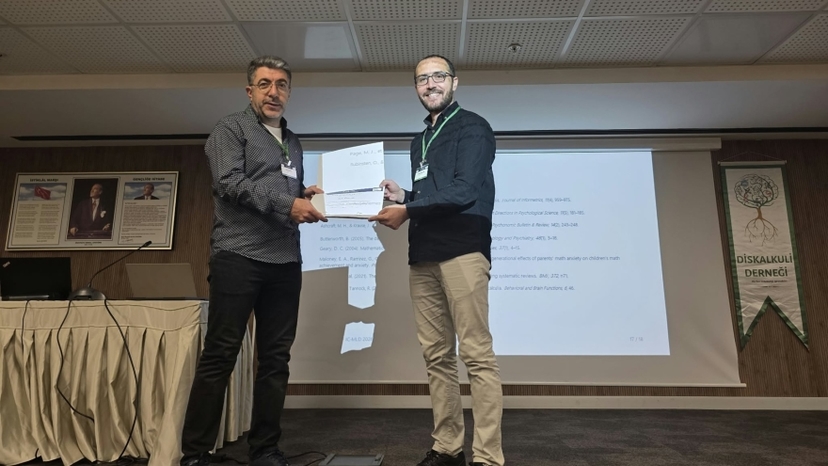
Asst. Prof. Aydın Söylemez Presented Paper in the 4th International Congress on Mathematics Learning Disabilities
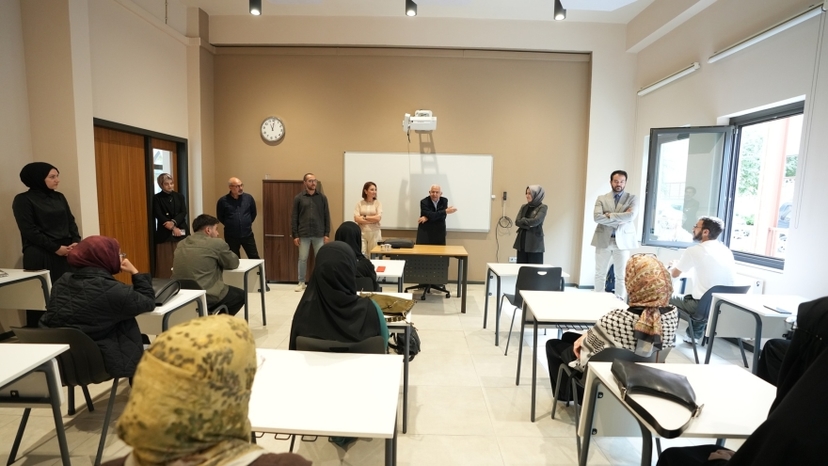
The School of Education Welcomed Its New Students with an Orientation Program
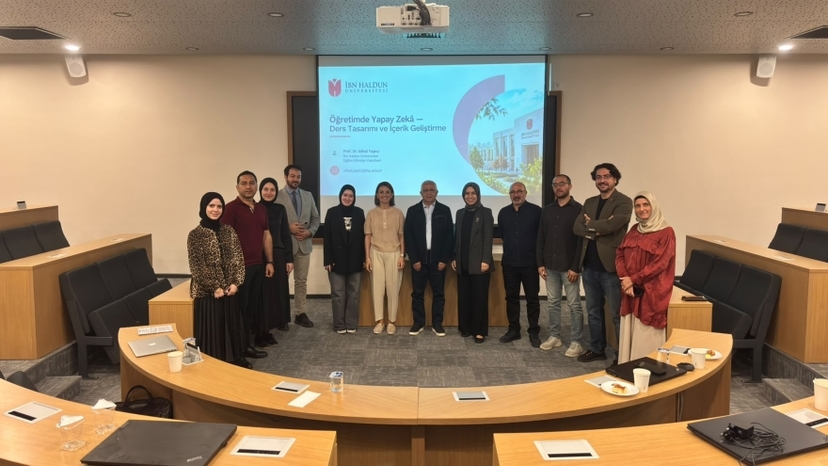
“The Use of AI in Teaching, Learning, and Assessment” Workshop Was Held for Faculty Members at the School of Education
“English Games Appropriate for Culture and Development in the Preschool Period” Workshop Held